
Barbados, Trinidad and Tobago, St. Lucia, St. Vincent and Grenadines, Curacao, Aruba, Colombia, Panama, Honduras, Mexico
We took our first extended cruise for a few weeks.
Good news: The Silversea line is fabulous with high-end luxury.
Bad news: We’ll never do it again. For us, nothing compares to the cultural immersion of land crossing and the freedom and time to explore.
The Motion of the Ocean
We’d been hesitant to take an extended cruise because previous water crossings –
But the large-ship cruises are so beloved by so many that we felt we should experience one. And we did love the idea of only unpacking once – a true blue benefit we rarely experience.

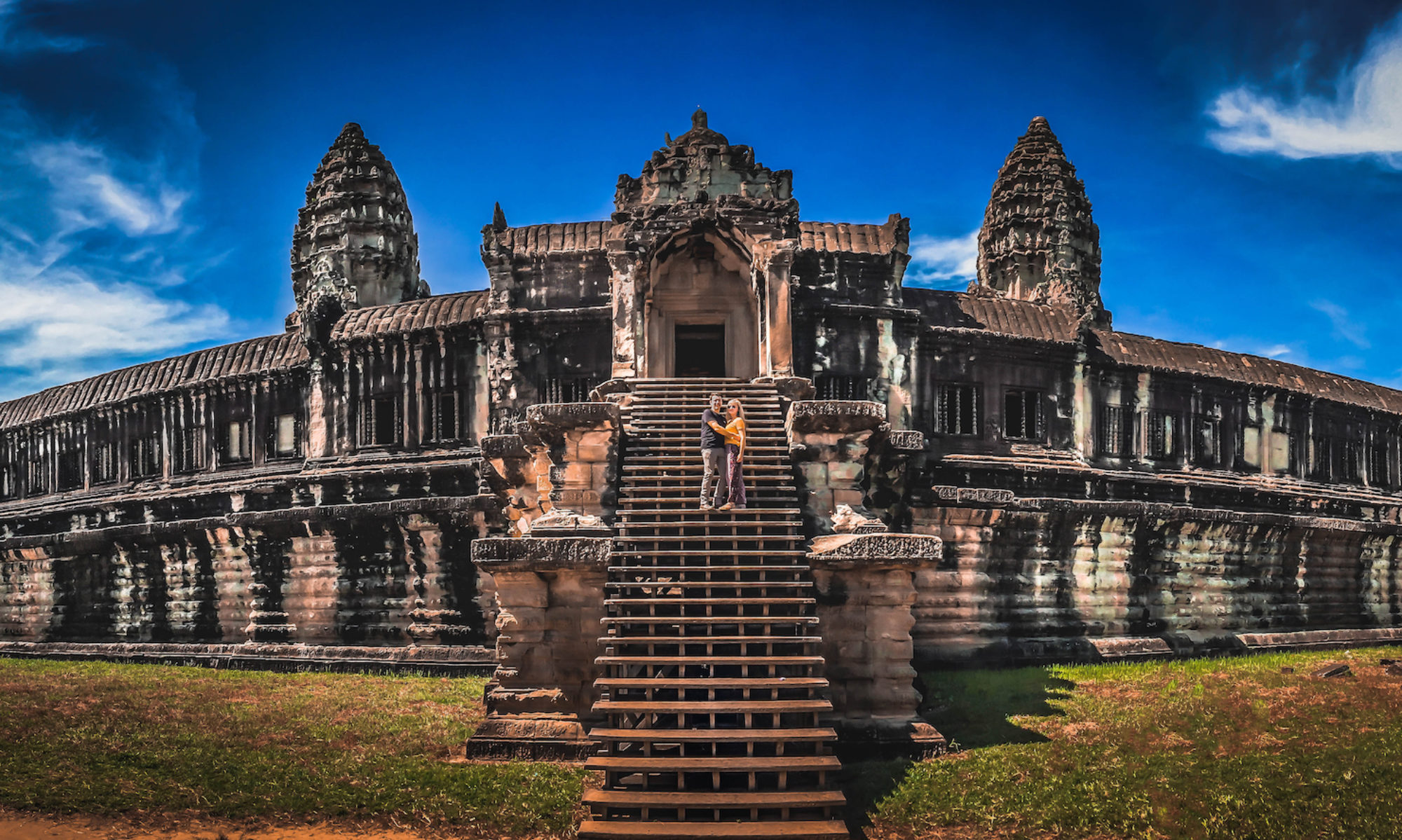
Featured photo: Cartagena’s Getsemani district. Above: Silversea’s SilverDawn
Three weeks on a Silversea cruise through several Caribbean islands (some new to us, some not), and then to Colombia, Panama, Honduras, Mexico and back to Miami, was a mixed bag for us.
We had a beautiful deluxe veranda suite with a sitting area, balcony, walk-in closet, and huge bathroom with a large tub and separate shower. We had a personal 24/7 butler, who did everything we asked. He even brought me ginger candy for motion sickness, but it didn’t help.
We chose the gorgeous ship Dawn because it only holds about 600, which appealed much more to us than the overwhelming 6,000 often on other cruise lines. The idea of queuing for tours, and far less personal service didn’t sound like fun to us.


The size of the Silversea docked next to the typical gargantuan cruise ships. That one had decks’ long slides like an amusement park. But the Silversea is intimate and luxurious.
We had a variety of top-notch restaurants and bars to choose from daily – included in the overall pricing – and incredible service all around. We asked for nightly champagne and caviar service in our room prior to dinner, and breakfasts on our balcony, which were all presented in 5-star fashion.
We had interesting conversations with other passengers, all of whom were dedicated travelers, certainly not just island hoppers. Some were just continually cruising on the ship through its evolving itineraries all over the world. But we missed most of the conversations we typically have with locals.
We celebrated Christmas and New Year’s Eve in truly elegant and extravagant fashion. We had a vast slate of on-ship activities to choose from including cooking classes, games, and expert-led classes and a variety of other programs.
But … the sea sickness overwhelmed all attempts to stave it off. During at least two days, it was a struggle to enjoy this lavish ship. Although the onshore activities – including such things as a submarine trip – were great, we didn’t appreciate the limited amount of time we had to enjoy them vs. our own timetable. Cruises, as we feared, provide whirlwind experiences that should be researched ahead of time to be sure to not miss a thing.

But we did have some true cultural learning moments. Our favorite was Cartagena.
Colombia Stood Out

Colombia stood out as the country we will be back to further explore – by land.
First, know that Cartegena, the colonial port city on Colombia’s Caribbean coast, is hot – metaphorically and physically. And I’m not exaggerating. A black leather crossbody I’ve used for decades of travel turned my light pink shirt black from its dye because I was literally drenched in sweat. That’s only happened similarly once before and involved a black belt and light-colored shorts during an extremely searing day in Pompei.
If you are on a leash as we were, there are a few places you must prioritize:
The UNESCO-designated Old Town, surrounded by the stone walls built by the Spanish colonists, and neighboring Getsemani, an artsy, funky enclave with a popular street-party scene overlooked by the 16th-century fortress, are must visits.


Celele Stands Out
Celele, a restaurant that has been featured in the New York Times, also should be high on your list – if you can get reservations.


The intimate Getsemani restaurant is “focused on resuscitating historic recipes with organic and local ingredients is now the most coveted seat in town. The chef Jaime Rodríguez captures Cartagena’s juncture between South America and the Caribbean in meticulously presented dishes: A smoked fish is covered in colorful flower-petal ‘scales’ (58,200 pesos), and a coconut sorbet is served in a nearly-soccer-ball-size pomelo (35,000 pesos). Reservations are essential,” the NYT reported.
Indeed.
Celele was wonderful.
The Blue Flower That Looks Like Its Name

We also took the time to learn about Clitoria Ternatea, commonly called the Blue Pea Flower. Colombians are banking on the beautiful bloom significantly helping to raise their standard of living.
Various statistics put Colombia’s poverty rate between 33% to 37%. It’s a vast improvement from, say, 2020 when it was 48%. But the disparity is painfully obvious; most people live on just a little over $2 a day.
Blue Pea Flower extract powder has natural health benefits and average Colombians are learning how to grow and sell it. It’s a rich antioxidant, anti-inflammatory, and has stress-relieving properties.
Increasing demand in the food, beverage, and nutraceutical industries has experts predicting global demand will increase from nearly $5 billion in 2024 to $12.4 billion by 2032.
The brilliant blue flower pops up all over Cartagena – even in Celele’s beautiful dishes. We met and talked with one Cartagenan woman who is using it to vastly improve her economic conditions with the help of a local nonprofit.
All The Markets
Another highlight for someone who believes anything with the word “market” in it should be a priority visit (flea, food, fish, flower), the a-bit-of-everything Mercado de Bazurto tops the list.
The enormous, labyrinth-like market, the largest in Cartagena, where even some locals say they get lost, was one of Anthony Bourdain’s destinations to meet vendors, see the incredible array of fresh fish, meats, fruits and produce, and taste freshly made dishes.


It’s a cacophony under the hundreds of blue tarps and within crudely built stalls. Honestly, it’s a kind of chaos in stifling heat. It’s also an incredible cultural experience. This isn’t a tourist destination; it’s an immersive exposure to their daily life.
You pass men in chairs getting hair trims; others filling cups of steaming Colombian coffee; huge arrays of herbs and spices; vast tables teeming with fish; farmers’ trucks overflowing with fruit; women cooking massive pots over open flames; scooters and wagons bustling by, their exhausts mingling with the smells of cooking; birds diving into any accessible area.
We didn’t feel unsafe, though I’ve read reports from other tourists who have claimed to feel so. I would advise against venturing far outside in the more dicey-looking area.
I’d highly recommend going to Bazurto as early as possible in the day, before the heat is unbearable. And I would recommend finding a local to not get you lost – though sometimes getting lost can be fun.