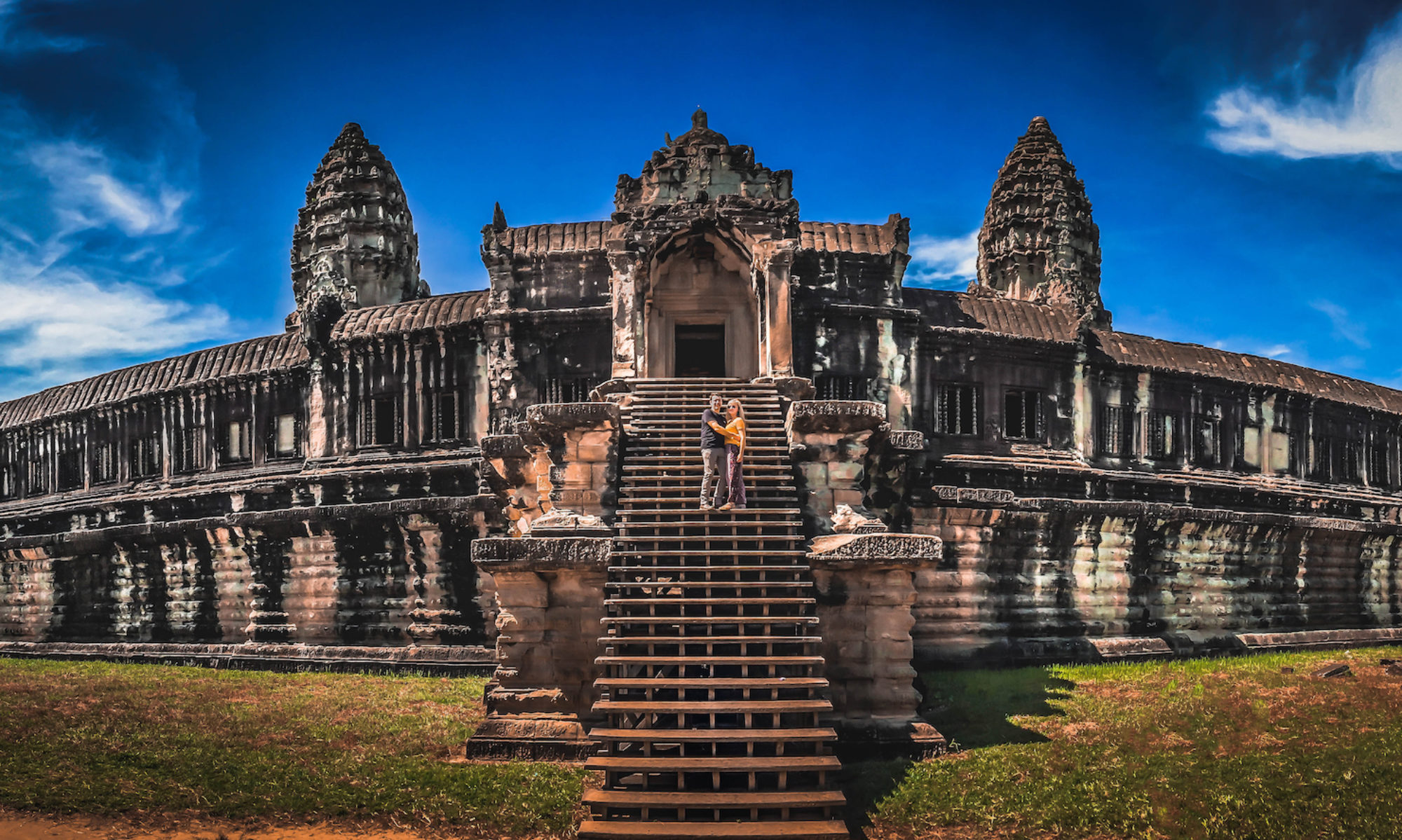


Moldova, Romania, Hungary, Slovakia and Poland
It’s been nearly a year since our trip through several former Soviet and Eastern Bloc countries.
Despite that, the region’s overriding concern remains what we witnessed firsthand: the quickly escalating threat of the Soviet Union’s corpse and former KGB and current Russian President Vladimir Putin’s intent to violently resurrect it.
Ukraine is mired in a bloody Russian invasion, but its fellow former Soviet-controlled territories – and beyond – are also well engaged in Russian hybrid warfare including cyberattacks, disinformation campaigns, extremely harsh economic punishment, and confirmed election interference resulting in the world’s first-ever presidential election annulment.
In July, two Russian drones – one carrying explosives – crossed into Lithuania. But this month reports dramatically escalated: NATO forces destroyed 19 suspected Russian drones over Poland; another Russian drone violated Romanian airspace, (Russian drone debris also was found earlier in Romania and Latvia); and three Russian MiG-31 fighter jets entered Estonia’s airspace without permission for 12 minutes after just two days earlier NATO jets had scrambled to intercept a Russian reconnaissance plane in neutral air space over the Baltic Sea. This week, Norway and Denmark reported suspicious drones causing major airport disruptions, and also called on NATO support.
I think it’s time to redefine a war when a war has begun – and time to recognize that Russia is involved in a much, much broader conflict.
Looping Ukrainian/Russian Perimeter
We spent a few weeks crossing Moldova, Romania, Hungary, Slovakia and Poland in fall 2024.
We had a conception of the Russian threat having transversed the previous Soviet-controlled Baltics the year previous. (See our Baltics posts.)
But experiencing the central and eastern perimeter of the former Soviet Union and the western is quite the contrast.
The Baltics – Lithuania, Latvia and Estonia – loudly presented themselves as a united front against Russia, aligned in their purpose to do anything to stop its encroachment into Ukraine – and expectedly further to reclaim each of them.
The Baltic nations are also aligned financially in their incredible economic ascent after the Soviet collapse. They’re very serious about the Russian threat and comforted by their NATO memberships – and those of more recent members Sweden and Finland just to their north.
All three Baltic countries have filed intent to leave the 1997 international landmine treaty to further protect their borders smack up against Russia.
Lithuania also withdrew from an international convention banning cluster bombs earlier this year.
Estonia is building 600 bunkers along the Russian border, and has introduced a new law that makes it mandatory for all new office and apartment blocks of a certain size to include bunkers or bomb shelters.
But in the countries along the border with Ukraine, the mood was much more mixed. Many of these countries haven’t had the same level of economic growth and development as the Baltics. Most people don’t want a return to a USSR or Russian dominance.
Russia’s assault on their independence, their attempts to become more Western, and their desire to benefit from EU funding and NATO protection is overwhelming – and sometimes successful.
Their support for Ukraine was there, but it was often begrudging.


Left to right: Woman selling her homemade pickled vegetables, juices and sauces in recycled bottles and jar in Gagauzia; Gagauzia Museum’s director proudly showing the region’s official flag, reminiscent of the Russian flag; friendly locals around Chisinau.
Moldova
Tiny Moldova, pop. 2.4 million, is seen as Russia’s most likely second target after Ukraine, which was attacked after voicing support of joining the European Union and NATO in 2022.
Moldova is the only country encircling Russia and Ukraine not a member of NATO or the EU. Russia attacked Ukraine after it took action to join both. It’s currently on fast tracks to be accepted by both NATO and the EU.
Shortly after the Russian attack on Ukraine, Moldovans also announced their intent to join the EU. Since, the EU has noted “staunch support for Moldova’s sovereignty, territorial integrity and resilience in the face of Russian hybrid attacks” and is fast tracking both their applications.
As a result, Russia first severely escalated gas prices, and later drove Moldova into a critical energy crisis in retaliation at the end of last year, all to help influence bringing pro-Russian parties to power.
Since its independence, Moldova relied on Russia for power, gas and natural gas. It was propelled into a serious emergency with intermittent blackouts, hypothermia, and deaths. Stored gas was only allowed for cooking. Now, thanks in part to the help from the EU, Moldova is relying on electricity from Romania.
Russia has furthered its assault with a constant barrage of propaganda against Moldova’s pro-EU government.
Russians literally bought Moldovans’ EU election votes with money supplied from oligarchs banned from Moldova. Moldovan police reportedly discovered a network of 140,000 people who received payments from Russia in return for votes against the EU during the country’s referendum on Oct. 20.
Russian bank cards and “tourists” flying in bags of cash delivered the money, making it hard to trace. Moldovan police confirmed $15 million from Russian bank accounts to voters in one month alone. The price of a vote reached as much as €200, a huge sum in Moldova, while total operations totaled $200 million.
That the pro-EU female president narrowly retained her position shortly after we left last year is particularly of note because Moldova is unique in having two entirely pro-Russian regions.

About 360,000 of its population live in a Russian-controlled breakaway region of Transnistria, which is sandwiched between Moldova and Ukraine and even has its own currency – which looks oddly like a plastic guitar pick. It has become a hot spot for cryptocurrency production, which the Russians also are reportedly using because it’s hard to trace.
Another 130,000 live in the Russian-friendly autonomous southern region of Gagauzia. A statue of former Soviet leader Vladimir Lenin sits on the main street in front of its government building. About 95% of them voted against joining the EU.
People there believe Russian propaganda that the U.S. is behind the war in Ukraine. They also believe the Moldovan government was coordinating with Romania to bring military by train to massacre them. Analysts have reported the Russians may seize control of government buildings in this region.
Folks in these areas love Russia and the Soviets. They liked being told where to work and where to live. They see life as being easier then, we were told. The pro-Russia propaganda was plastered there, but really it was everywhere we visited.
In other regions of Moldova, the Russians are reviled and folks talk of their cruel history in causing famine – gruesomely to the point of cannibalism in the past – and death.
Currently, Russian propaganda via social media platforms has reached epic proportions with the Parliamentary elections at the of this month.
As he has also dismantled efforts to combat misinformation here, U.S. President Trump has also slashed tens of millions of dollars in diplomatic and financial support funding fighting such disinformation and enabling free elections in Moldova and around the world.

Romania
All former Soviet Bloc countries have taken in Ukrainian refugees, but Moldova has taken the most per capita.
In Romania, people were a bit more vocal about it, however. Some Romanians told us that aid to Ukrainian refugees wasn’t based on need – and resented that their own people could use the help instead in their EU-member country, which is struggling with the highest debt.
They’re also struggling with Russian election meddling and became the first country in the world to annul their presidential election last year after finding evidence of Russian interference to elect a pro-Russian far-right candidate. Rerun in May, a pro-EU centrist became president.


Clockwise from top left: the Memorial for the Victims of the German Occupation in Budapest, erected in Budapest’s Liberty Square in 2014, is a source of much anger claiming it absolves Hungary’s Nazi complicity and collaboration. Some say it depicts Hungary as an Archangel Gabriel being attacked by a Nazi eagle, symbolizing the country as an innocent victim. Many Jewish relics are placed there in protest; “Shoes on the Danube Bank” commemorates the slaughter of thousands by fascist Hungarian militia. People were forced to remove their valuable shoes before being shot into the river around the start of 1945; In 2011, Hungary recognized the contributions of US President Ronald Reagan in ending the Cold War. Nearby is a statue of George Herbert Walker Bush erected in 2020 for his efforts to transform Hungary into a free and democratic society; the irony of those statues standing near to “Dictator” Victor Orban’s entrance.
Hungary
The Hungarians referred to their prime minister, a right-wing extremist favored by our president, as their “dictator.” He has enacted national states of emergency due to migration and the war in Ukraine that allow him to rule by decree and override any act of parliament. He’s also severely restricted journalists.
And yet the Hungarians persist. When he banned a gay pride parade in June in order to protect children from “homosexual propaganda,” more than 100,000 Hungarians – the largest pride turnout ever – peacefully flooded the capitol Budapest.


Visible are the Grand Prix winner Radovan Stoklasa’s shots of the attempted assassination on May 15, 2024 of Slovakian Prime Minister Robert Fico, who later recovered from two bullet wounds. He remains in office and highly criticized for his supportive actions toward Russia.
Slovakia
In Bratislava, Prime Minister Robert Fico has maintained relations with Moscow throughout the war, contrary to most of the EU.
Slovakia joined Hungary to block EU sanctions against Russia in June, and its foreign minister recently suggested that “perhaps” Russia should be forgiven.
Fico even attended Russia’s Victory Day Parade this year in Moscow and met with Putin. He refuses to meet with Ukraine’s President Volodymyr Zelenskyy and regularly criticizes him.
An estimated 60,000 Slovaks took to the streets of Bratislava – and across the country – to protest after a photo of him shaking Putin’s hand surfaced.
Protestors have derailed his career before: In 2018, after two journalists uncovering government corruption were murdered, 100,000 protestors turned out and he lost the next election.
He’s back, and it will be interesting to see if the people turn on him again.
Fico survived an assassination attempt in 2024.


Pictures from the Nazis’ sadistic Auschwitz-Birkenau concentration camps.
Poland
In Poland, which has an estimated 2 million Ukrainian refugees, the government is gearing up for physical war.
Indeed, on Sept. 10, Polish forces in unison with NATO forces shot down suspected Russian drones in Polish airspace. It is the first time a member of the Western military alliance is known to have fired shots during the Ukrainian conflict.
Poland borders both Ukraine and Russian strategic partner Belarus. Poland recently announced that every adult man in the country must be battle ready, and there will be a new military training plan in place by the end of this year. Enrollments are skyrocketing.
Prime Minister Donald Tusk has also expressed interest in a French suggestion that it share its nuclear umbrella with European allies, in case the U.S. withdraws its nuclear shield.
Poland will soon spend 4.7% of GDP on defense – it hopes to build the largest army in Europe, eclipsing the UK and France. In contrast, the U.S. spends roughly 3.7% of GDP on defense. The UK spends 2.3% and aims to raise that to 2.6% by 2027.
Poland isn’t going down without a fight.